Skip to content
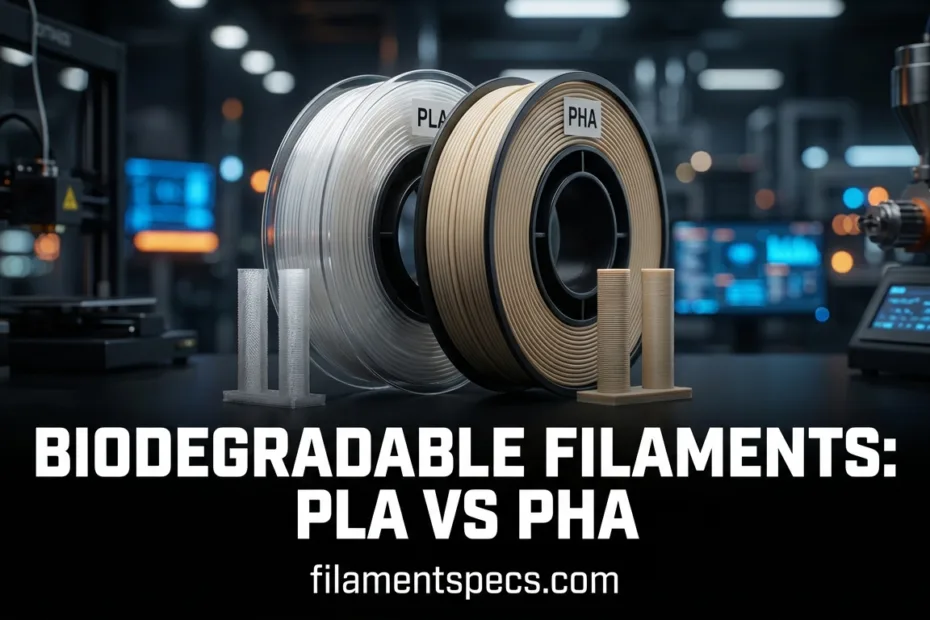
Close-up of spools of biodegradable filaments, PLA and PHA, ready for 3D printing.

Biodegradable Filaments: PLA vs PHA

A side-by-side snapshot of PLA and PHA filaments using real filament datasheets plus widely used compostability standards and guidance. Category PLA Filament PHA Filament Polymer Family Aliphatic polyester (poly(lactic acid)); commonly used as a “baseline”… 
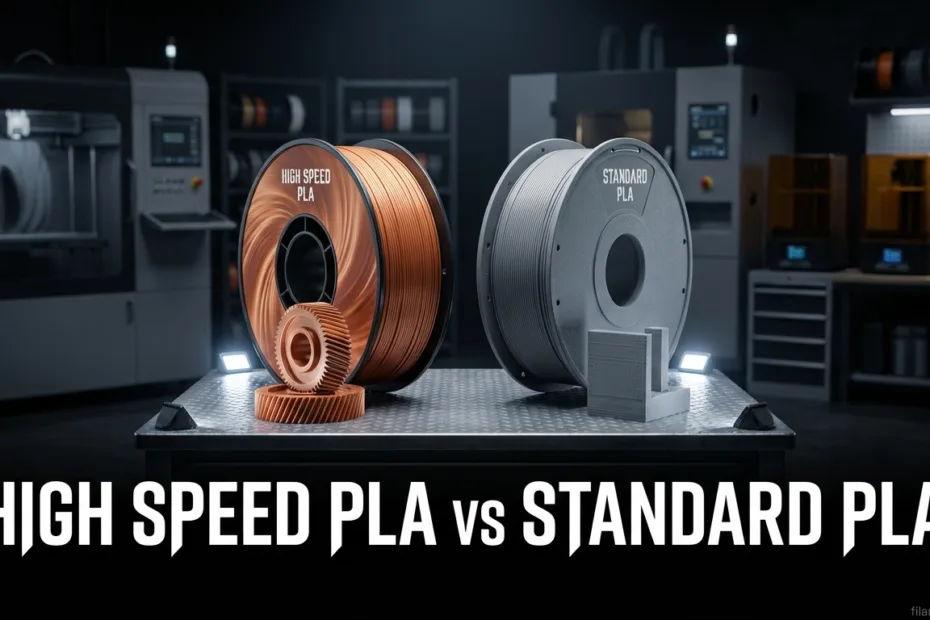
Close-up of a spool of high speed PLA filament next to a standard PLA spool, highlighting material differences…

High Speed PLA vs Standard PLA

This table compares High Speed PLA and Standard PLA by the material behaviors that most affect real-world print speed, quality, and consistency. Category Standard PLA High Speed PLA Core Intent Balanced, forgiving printing with wide… 

Close-up of black and gold filament spools on a 3D printer table.

Cheap vs Expensive Filament: Is It Worth It?

A practical, technical comparison of what typically separates budget filaments from premium filaments in real-world printing. What You Compare Budget Filament Premium Filament Typical Price Pattern Lower $/kg, fewer extras bundled (packaging, QC data, support).… 

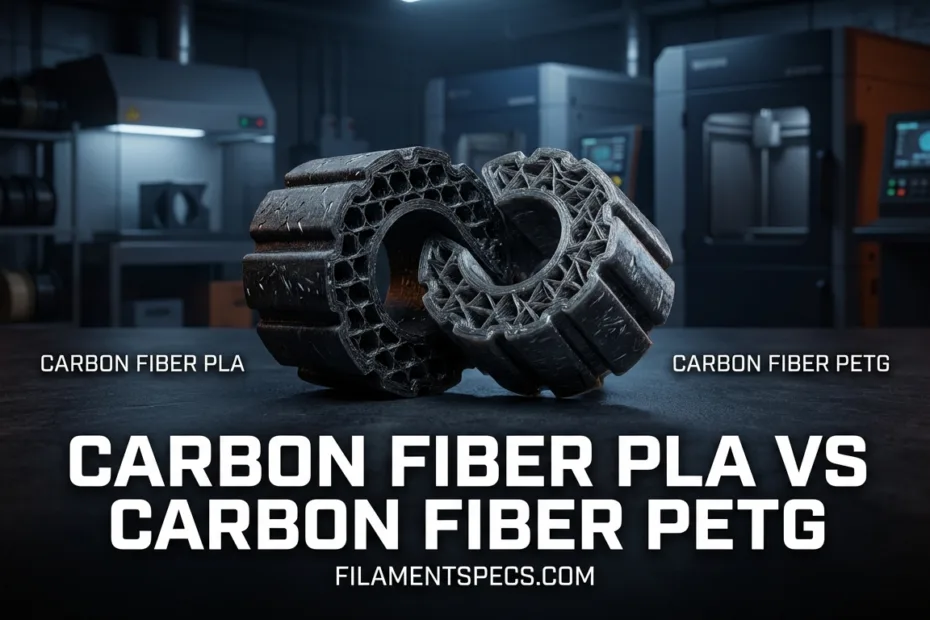
A close-up of a carbon fiber filament coil used for 3D printing.

Carbon Fiber PLA vs Carbon Fiber PETG

Spec / Behavior Carbon Fiber PLA (CF-PLA) [a] Carbon Fiber PETG (PETG-CF) [b] Base Polymer Family PLA matrix with carbon-fiber reinforcement PETG (glycol-modified PET) matrix with carbon-fiber reinforcement Density 1.29 g/cc 1.34 g/cc Tensile Strength… 

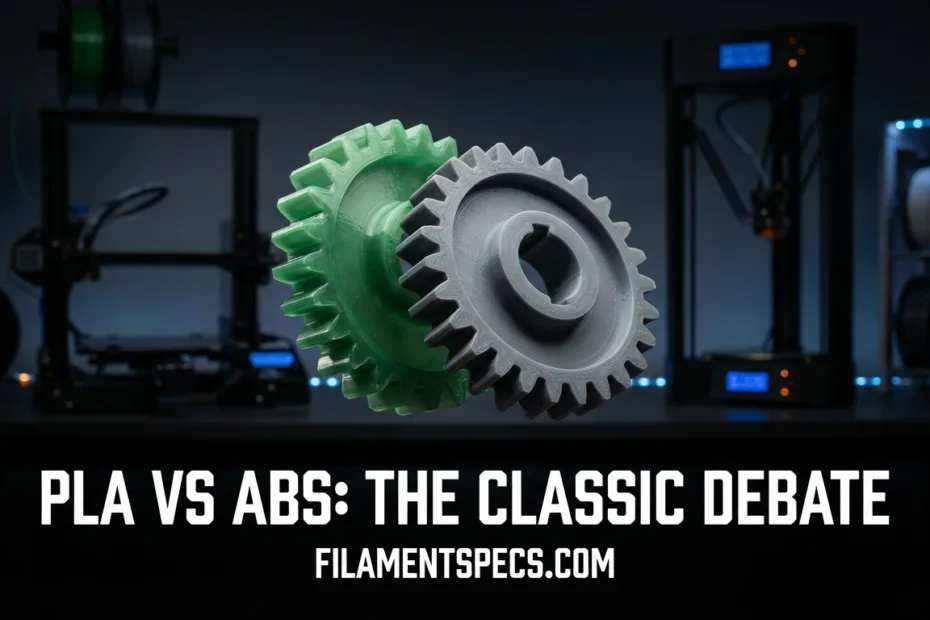
Green and gray gears from a 3D printer filmed close-up for PLA vs ABS debate.

PLA vs ABS: The Classic Debate

Category PLA Filament ABS Filament Polymer Type Thermoplastic polyester (polylactic acid) Amorphous terpolymer (acrylonitrile–butadiene–styrene) Typical Nozzle Temperature (FFF) 190–220 °C 230–260 °C Typical Bed Surface Temperature 20–60 °C 90–110 °C Enclosure Optional (helps consistency on large parts) Commonly used… 

Two plastic samples labeled ABS and ASA stand outdoors next to a plant.

ABS vs ASA: Which is Better for Outdoor Use?

Outdoor-Relevant Factor ABS Filament ASA Filament Filament-Focused Baseline Recommended nozzle: 255 °C; recommended bed: 100 °C (80–110 °C range). Outdoor exposure can lead to yellowing and increased brittleness over time; shrinkage is commonly noted around 1–2% after cooling.[b]… 

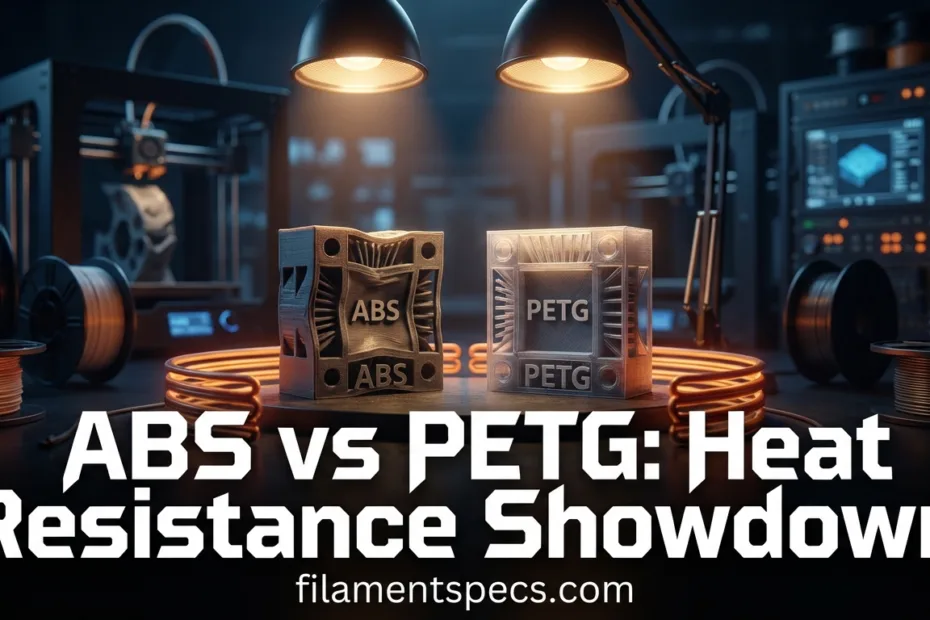
ABS and PETG filament spools shown side by side in a 3D printing setup.

ABS vs PETG: Heat Resistance Showdown

Category ABS (Example: ABS-M30) [a] PETG (Representative Copolyester) [b] What “Heat Resistance” Usually Means Keeps shape closer to higher temps, especially under load Stays tough and stable up to a point, then softens sooner under… 

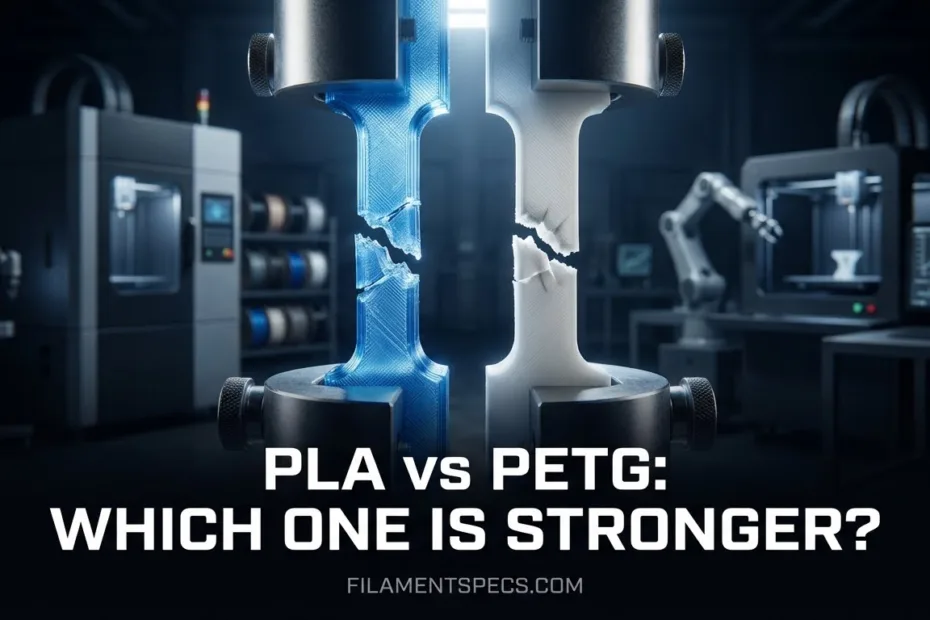
A close-up of 3D printer extruders working with blue PLA and clear PETG filament.

PLA vs PETG: Which One is Stronger?

PLA vs PETG Strength-Oriented Specs (Typical Material Data) Spec / Signal PLA (Typical) PETG (Typical) Why It Matters for “Stronger” Glass Transition (Tg) 55–60 °C ~80 °C Higher Tg usually means stiffness holds up at warmer conditions.…